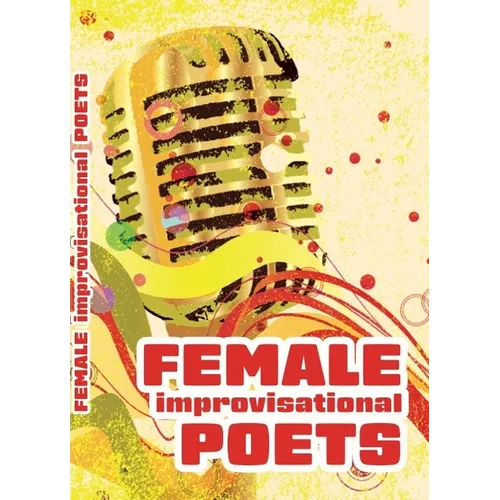
Female Improvisational Poets: Challenges and Achievements in the Twentieth Century - Paperback
Female Improvisational Poets: Challenges and Achievements in the Twentieth Century - Paperback
Couldn't load pickup availability
by Xabier Irujo (Editor), Iñaki Arrieta Baro (Editor)
In December 2009, 14,500 people met at the Bilbao Exhibition Centre in the Basque Country to attend an improvised poetry contest. Forty-four poets took part in the 2009 literary tournament, and eight of them made it to the final. After a long day of literary competition, Maialen Lujanbio won and received the award: a big black txapela or Basque beret. That day the Basques achieved a triple triumph. First, thousands of people had gathered for an entire day to follow a literary contest, and many more had attended the event via the web all over the world. Second, all these people had followed this event entirely in Basque, a language that had been prohibited for decades during the harsh years of the Francoist dictatorship. And third, Lujanbio had become the first woman to win the championship in the history of the Basques. After being crowned with the txapela, Lujanbio stepped up to the microphone and sung a bertso or improvised poem referring to the struggle of the Basques for their language and the struggle of Basque women for their rights. It was a unique moment in the history of an ancient nation that counts its past in tens of millennia: I remember the laundry that grandmothersof earlier times carried on the cushion [on their heads] I remember the grandmother of old times and today's mothers and daughters. . . .
Author Biography
Born in exile in Caracas, Venezuela, in 1967, Xabier Irujo is the chair
of the Center for Basque Studies at the University of Nevada, Reno,
where he is a professor in Basque Studies and Gender, Race and Identity.
He was the first guest research scholar of the Manuel Irujo Chair at
the University of Liverpool, William Douglass visiting lecturer at the
University of Massachusetts Amherst, and Eloise Garmendia Chair at Boise
State University. He holds three master's degrees in linguistics,
history and philosophy and has two PhDs in history and philosophy. He
has mentored numerous graduate students and has chaired or been a member
of nearly twenty PhD dissertation committees. Dr. Irujo has lectured in
more than thirty American and European universities and academic or
cultural institutions (typically governments, parliaments, museums and
libraries.) He has published on issues related to Basque history and
politics and has specialized throughout his career in genocide studies
with a focus on physical and cultural extermination. He serves on the
scientific committees of six academic and university presses in Europe
and the Americas. Dr. Irujo has authored more than fifteen books and a
number of articles in specialized journals and has received awards and
honors at national and international levels. His recent books include Gernika 1937: The Market Day Massacre (Nevada University Press, 2015), Gernika: Genealogy of a Lie (Sussex Academic Press, 2018), and Charlemagne's Defeat in the Pyrenees: The Battle of Rencesvals (Amsterdam University Press, Amsterdam, 2021).