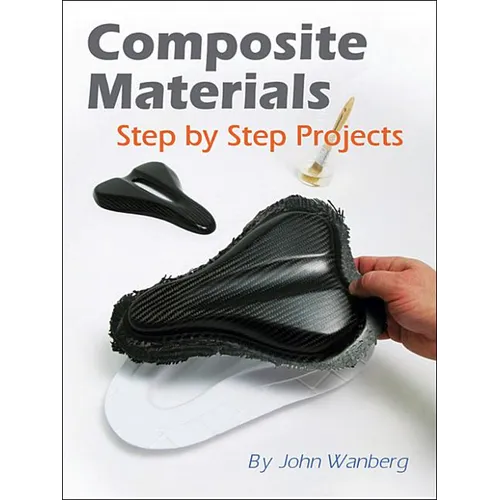
Composite Materials: Step-By-Step Projects - Paperback
Composite Materials: Step-By-Step Projects - Paperback
Couldn't load pickup availability
by John Wanberg (Author), William Longyard (Author)
In his popular Fabrication Handbook series, Professor John Wanberg covered the theory behind building with composite materials. In Composite Materials: Step-By-Step Projects, he cuts straight to the practical application. Instead of dense theory, this hands-on workshop guide relies on high-resolution, step-by-step photos to lead fabricators through real-world composite builds.
Readers are guided through complete project workflows-from designing initial sketches and making custom molds to cutting fabric, vacuum bagging, resin curing, and final part finishing.
Featured Projects & Shop Techniques Include:
- Fabricating lightweight custom components, including a bicycle seat and a race car nose-piece
- Working with simple open molds as well as advanced vacuum bag and pressure-enclosure setups
- Essential shop fabrication workflows designed specifically for small-shop and garage builders
Each chapter opens with a concise overview outlining project goals, followed by clear, sequential photography covering every step from concept to finished part. Whether you want to master fiberglass or carbon fiber fabrication, this book gives you nine complete reasons to build your own ultra-strong, ultra-light components.
Front Jacket
In books one through three, Author and Professor John Wanberg, took pains to explain the why and how of building with composite materials. Each page was allocated nearly fifty-fifty between photos and text.
In this new book of step-by-step projects, John takes a different approach. Instead of explaining the theory and what each component is made of, John cuts to the chase. Nearly every page is allocated to photos.
The pictures lead the reader through a detailed how-to sequence. From making the mold, to cutting the fabric, and finishing the part, all the information is here. Projects include everything from fabricating speaker enclosures to hood scoops and cell-phone cases. Some require only simple molds, while others rely on more sophisticated vacuum bagging methods.
Each chapter starts with copy, just enough to explain the project and the goals. Next comes the material panel, a list of all the tools and materials needed to duplicate the project seen in that particular chapter. Finally, the vast majority of each chapter is given over to the how-to photos. Photos that show, literally, each step along the way, from the initial sketch to the finished part.